“Dearest gentle reader, the time has come to place our bets for the upcoming social season.”
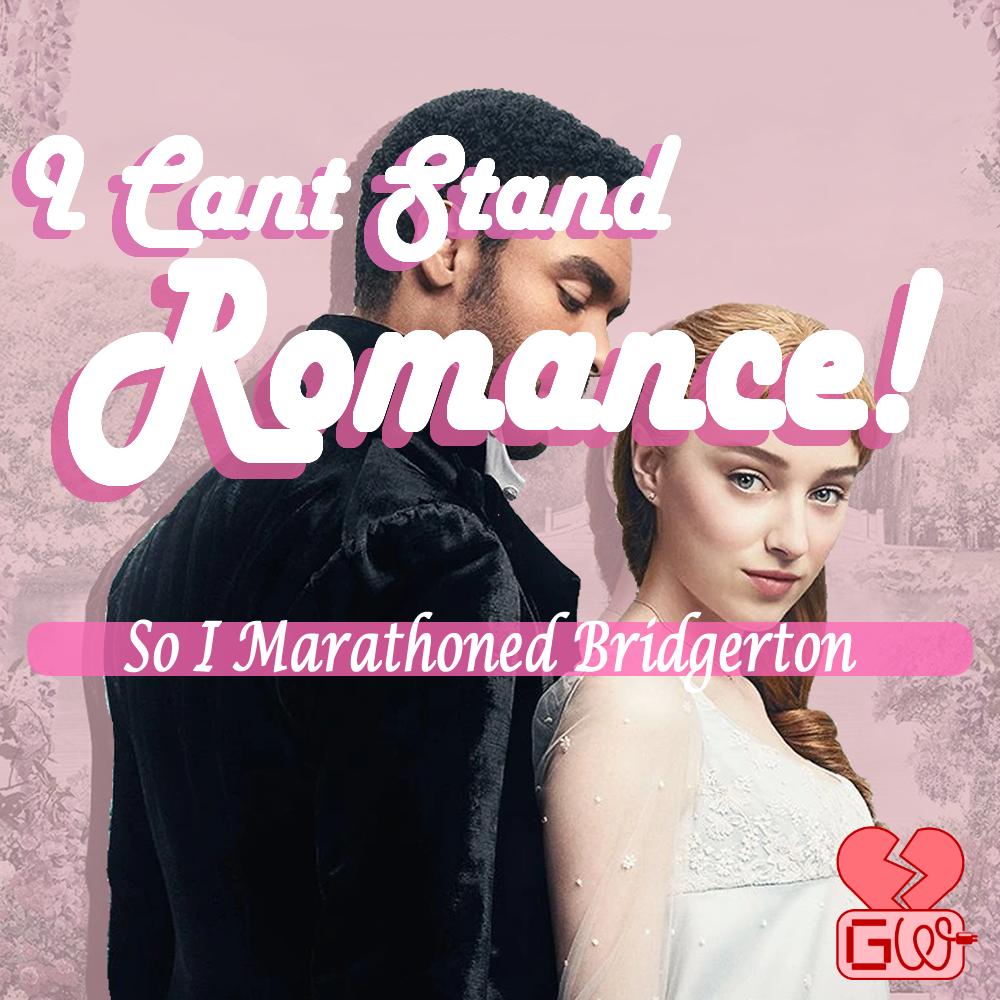
I am not a big fan of the romance genre. I am a massive fan of other genre fiction across mediums. However, short of romanceable NPCs in video games (see my previous article: https://tinyurl.com/bdeszmdp), falling in love has never really appealed to me as a plot. However, it is heartbreak month, so romance is on brand, especially if the romance is constantly getting sidetracked by characters with real life problems. I am not meaning your typical shadow daddy who is mean and toxic but we still love him – that’s my understanding of the trope, anyway. I am not talking about a man with a tortured past that we have to fix. I found Bridgerton season one to be compelling and had no trouble marathoning it in preparation for Geekwave’s season four release event, which should be happening as this article is going up (possible link here as well). So let’s flash back to the dark times of 2020 and take a look at this series from my view, which is so inexperienced in the genre of romance. Also, the show is quite old by this point, but obviously, I will be writing without worrying about spoilers. So if you missed the show, go watch the first season and then come back to read my article.
“This author has been reliably informed that the only thing swirling around the Bridgerton home is a whirlwind of silk and tulle.”
I am pretty new to Regency romance in general. I have recently begun a pilgrimage through Jane Austen’s works for one of my classes, which has led me to rapidly learn more about the genre. It’s been an interesting time reading about a society so pure and different from our own. As a reader, it can be kind of frustrating to read the way that women were treated in this period. It was a time well before major women’s rights movements and during that time period, it was exceedingly rare to see an independent woman. Women were bound to fathers, brothers, and eventually their husbands. They were normally not even allowed to own property. Eloise Bridgerton is the main voice in Bridgerton for this frustration. She is also one of my favorite characters for this reason. Eloise almost feels like the show pointing at its own romance plot as laughable at times. She is allowed to speak and complain about her place in society, so long as she doesn’t speak too loudly. Her family and friends know she wishes to be more than a debutante and wife. However, by the end of the first season, she has only begun to dream of escaping the life laid out for her. In Eloise, we are allowed to see an obvious criticism of the power dynamics of the time. It is acknowledged by someone old enough to learn her place and young enough to reject it and the duties that are expected of her.
“If one cannot think of a reason to marry for love, one must at least marry for sense.”
To compare Bridgerton to something like Jane Austen, Austen doesn’t acknowledge this power difference directly. It’s impossible to know what her full intent with her writing was; however, it’s clear she had thoughts on the power dynamics of the Regency in her books. Austen was unable to directly address the issues of her time due to the downside of actually living during that time period and being a woman. She had to play nice within the power dynamics of the time. A show like Bridgerton, made in 2020, is not shackled by such expectations. The power dynamics of the time are also addressed in different ways through Daphne. The main heroine of Bridgerton’s main plot. Daphne is the driving force of the first season. Her scheming with tall, dark, and handsome Duke Simon Hastings drives the early drama in the show.
“This author believes that a lady’s imagination is very rapid; it jumps from admiration to love, from love to matrimony in a moment.”
With all the fantastic criticism of the time period in mind, I can also understand why period romance is so alluring. In the Regency, it was considered uncouth or even scandalous for a man and a woman to be alone together without a chaperone. Let alone something like holding hands or, God forbid, hugging and kissing! We all know what physical touch leads to, and any sort of physical intimacy was enough to ruin a woman’s reputation completely. Women were saddled with the expectation of being chaste and pure. If they failed to meet that unrealistic standard, their reputation was gone and they would be ostracized from society. This is depicted in the show with the side plot of Marina Thompson. She deals with being pregnant out of wedlock throughout the season. We see just how damaging this is for a woman and how her expectations of love and romance got her into this perilous situation. Marina is a character who represents my favorite thing about Bridgerton: characters who are asked to choose between their morals and their own self interests. The villain of this show is not someone trying to keep our lovers apart. It’s not a love triangle where one person is trying to make the other look back through duplicitous means. Almost all of the conflict in the show is directly or indirectly caused by the society of the time. The societal expectations of the Regency are the driving force behind the issues of our main characters. The ways that they are forced to move through society for simply being human are unnatural, and for me, that was the main draw of the show. The societal expectations act as convenient plot devices to force conflict among the characters. I also thoroughly enjoyed that nearly all of the characters are allowed to be human. They make mistakes that are reasonable, and they say things that aren’t correct. The cast acts in their own interests because they feel forced to. This is due to some sort of societal pressure, honor, or obligation to others. Contrary to my experience with romance in the past, the show felt like everything flowed naturally. This excludes a couple of notable problems I had with the plot.
“Pride, it seems, is a most stubborn companion.”
I felt like most of the plot points were decent and the characters made sense. I did find the duel in the middle of the story a bit over dramatic, but I can excuse a little melodrama here and there. It is a romance story, so over-the-top emotions and nods to Regency honor are expected. There were only two things I didn’t care for. The first was how quickly Simon and Daphne leave when scandal befalls the family towards the end of the season. This is after almost an entire episode of Daphne and Simon adapting to their new life and speaking at length about how they need to provide for the people under the dukedom more adequately. They just leave immediately after this because they have some drama based on differing ideas of marriage and Simon not explaining why he “can’t have children.” He has good reasons for not going into the issue. He has had trauma from his childhood, it makes sense that he is disconnected from people and doesn’t value himself. He was told his entire life that he isn’t worth it. However, I immediately thought: wait, why are we completely focused on this now? Weren’t the people in the dukedom struggling to pay rent and possibly starving from mismanagement? That should probably be addressed.
“This author finds herself bereft of words—almost.”
The final misstep is the identity of Lady Whistledown. Throughout the show, gossip sheets commenting on the events of the series are used as an in-story narration device. Everyone in the story reads them to catch up on gossip. The mysterious writer of the sheets, Lady Whistledown, is in danger from the aristocracy. High society is not a fan of her writings on them, especially the Queen. Throughout the first season, another side plot centers on Eloise. After a long investigation and many twists and turns, Eloise comes nearly face-to-face with Lady Whistledown. Although she doesn’t see her, Eloise is able to save Whistledown from being unmasked. As the season ends, we are shown that the Whistledown is, in fact, Penelope Featherington. I have not mentioned her in this article because she was one of my personal favorite characters, due to how innocent and fun she is. Penelope is almost entirely a static character. Meaning she doesn’t act, things happen to her, she gets one moment in the story where she tries to speak for herself and it fails immediately. I am thinking of when she tries to warn Collin about Marina’s attempts to seduce him. For me, the reveal that she was actually this masterful writer who has the entirety of high society dancing to her tune just doesn’t hit. There are some events in the season that support it, but I don’t care that it was foreshadowed. I don’t buy that Penelope Featherington, the girl who didn’t know how Marina came to be pregnant and spent a good portion of an episode with Eloise trying to get someone to tell them, would be connected enough to do this. As I approach season two, I am trying to have an open mind about the twist, but it makes the writer’s side of my brain absolutely bounce out of my skull from the confusion. I also am not a big fan of revealing the mystery so early. The showrunners may not have known they would get a second season and thus felt they needed to wrap everything up, which is understandable. However, a season ending and character reveal, it falls incredibly flat for me.
I do plan to finish season two and season three before the previously mentioned Geekwave event and season four release. I enjoyed season one for the most part. I still am not the biggest fan of romance. However, I found Bridgerton had enough in the character and plot department to keep even me interested. The series is a bit melodramatic and there are some contrivances, but as a writer, I find I can excuse those more often than most. As Alfred Hitchcock once said about why no one ever calls the police, “It’s dull.” In spite of its flaws, Bridgerton is anything but dull.